
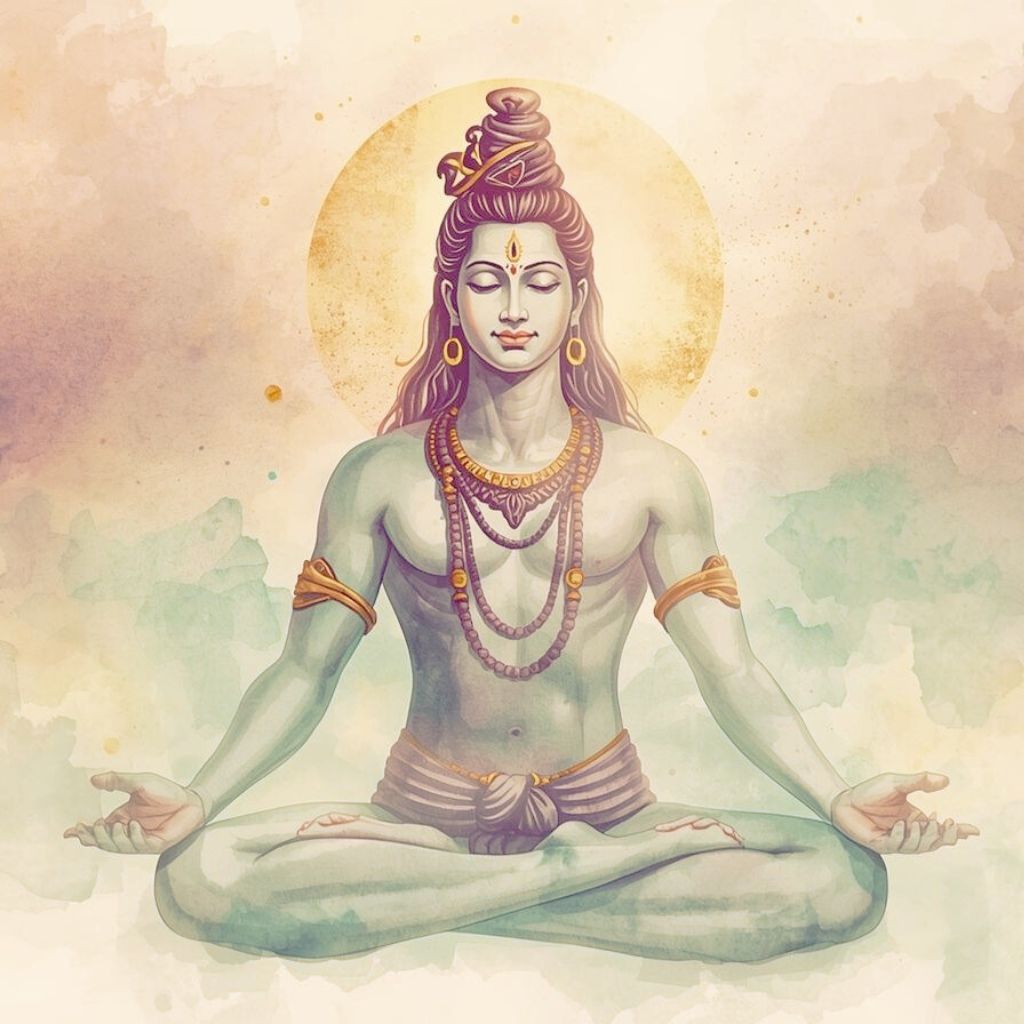
Yoga was not born as a physical discipline or as a wellness technique. It arose as a path of knowledge, an inner science aimed at understanding the nature of the mind, the body, and consciousness. Before becoming a practice, yoga was an experience, and before being taught, it was realized.
The meaning of the word Yoga
The word Yoga comes from the Sanskrit root yuj, which means to unite, integrate, or link. It does not refer only to the union of body and mind, but to something deeper: the integration of the individual being with its essential nature, with reality as it is.
Yoga is not something that is done. It is a state of consciousness that is cultivated through practice.
Yoga as a science of experience
For thousands of years, the knowledge of yoga was transmitted orally, directly, from teacher to disciple. Not as a system of beliefs, but as a method verifiable through personal experience.
For this reason, yoga can be understood as a science:
• it observes inner experience
• it proposes concrete practices
• and it allows its effects to be verified
It does not require faith, but sustained practice and conscious observation.
Patañjali and the systematization of yoga
Around the 2nd century BCE, the sage Patañjali compiled and organized this vast body of knowledge in the Yoga Sutras, a brief and profound text that defines yoga as: “Yoga is the cessation of the fluctuations of the mind.”
With this definition, yoga makes its purpose clear: it is not about shaping the body, but about clarifying consciousness.
Patañjali did not “invent” yoga. He organized it, making it transmissible, accessible, and structured.
The first yogi: Adi Yogi
According to yogic tradition, the origin of yoga is linked to the figure of Adi Yogi, the first yogi, identified with Shiva.
This tradition places his appearance more than 15,000 years ago, in the Himalayan region.
Adi Yogi represents not only a primordial teacher, but a fully realized state of consciousness—one that has transcended the limitations of the body and mind. From this perspective, yoga does not begin as a philosophy or a belief system, but as a state of being.
The teaching transmitted by Adi Yogi was not a religion, but an inner science, a true internal technology oriented toward the evolution of the human system.
Tradition speaks of 112 methods for the transformation of consciousness and the self-realization of one’s true nature.
From this perspective, Shiva and divinity are not separate: they are one. And that same divine principle dwells within every human being. Yoga, then, does not seek to attain something external, but to remember and realize what we already are.
The teaching of Adi Yogi is not transmitted as dogma, but as direct experience: a path toward the recognition of the unity between the individual and the absolute.
The transmission to the Saptarishis
Tradition recounts that Adi Yogi transmitted this deep knowledge of the mechanics of the human system to the Saptarishis, the seven sages, in the Himalayan region more than 15,000 years ago.
According to traditional accounts, after a prolonged period of intense sadhana, Adi Yogi shared these teachings with seven disciples on the shores of Lake Kanti Sarovar, near Kedarnath. This transmission was not intellectual, but experiential, based on the direct experience of consciousness.
The core of this teaching can be summarized in one essential idea:
“The inner is the only way out.”
From this transmission, the Saptarishis adapted the knowledge they received to different human contexts, giving rise to multiple paths and approaches to yoga. Despite their diversity, they all share the same fundamental purpose: liberation from suffering through direct knowledge of oneself.
A living knowledge
The essence of yoga does not belong to the past. It is not contained only in texts or symbolic narratives. Yoga is a living inner technology that continues to function today because it works with the same raw material as always: the mind, the body, the breath, and consciousness.
My experience
I began my journey on the path of yoga in 2016, and since then my way of experiencing life has been profoundly transformed.
Through sustained practice, I gradually found a sense of harmony, neutrality, and fullness that I had never experienced before, and which, over time, has remained stable.
My vision of myself and of the world changed. Yoga revealed itself as an integral method, capable of encompassing all dimensions of being: the physical, the mental, and the spiritual.
More than a practice, it became a way of inhabiting experience.
Closing
To speak of the science of yoga is to speak of a path that does not separate spirituality and experience, knowledge and practice, observation and transformation.
Yoga does not promise anything. It offers a path. And that path can only be understood by walking it.
✨ Editorial note
This text introduces yoga from its origin and deeper meaning. The following posts in this section will explore its practices, principles, and applications as a living and contemporary science of consciousness.